

A menopause nutrition plan is not the same plan that worked in your 30s, or even in perimenopause. Once your periods stop, your body runs on a new set of rules, and the way you eat needs to catch up.
Menopause is officially one full year without a period. For most North American women, that lands around age 51. After that, you are postmenopausal for the rest of your life.
That sounds dramatic, but it doesn’t have to be. In fact, many women feel steadier after menopause than they did during perimenopause. Even so, your body still needs different support.
Here is what most women get wrong about this, and what actually works.
Why Nutrition After Menopause Feels So Confusing
Most nutrition advice is written for women in perimenopause or younger stages of life. As a result, women after menopause often end up guessing about what actually works for their bodies.
Here is where they get stuck:
• Eating less and less to manage weight, which speeds up muscle loss
• Skipping strength training because cardio feels safer
• Not eating enough protein to protect muscle and bone
• Assuming weight gain around the middle is just “age” and nothing can help
• Following the same plan that worked in perimenopause, even though hormone levels are now low and steady instead of up and down
The good news is there is a simpler way. Here it is.

Step 1: Make Protein the Center of Your Menopause Nutrition Plan
After menopause, estrogen levels remain low. Since estrogen plays a role in protecting muscle, maintaining muscle mass becomes more challenging as you age. That’s why getting enough protein and incorporating strength training are so important.
That material is protein. Most women do well aiming for 25 to 35 grams at each meal. If you want the full picture, here is more on why protein matters more than any other macro.
Common mistake to avoid: saving most of your protein for dinner. Your body uses protein better when it is spread through the day.
Practical example: swap toast and jam for two eggs with Greek yogurt and berries. Breakfast goes from about 6 grams of protein to over 30.
Step 2: Lift Something Heavy
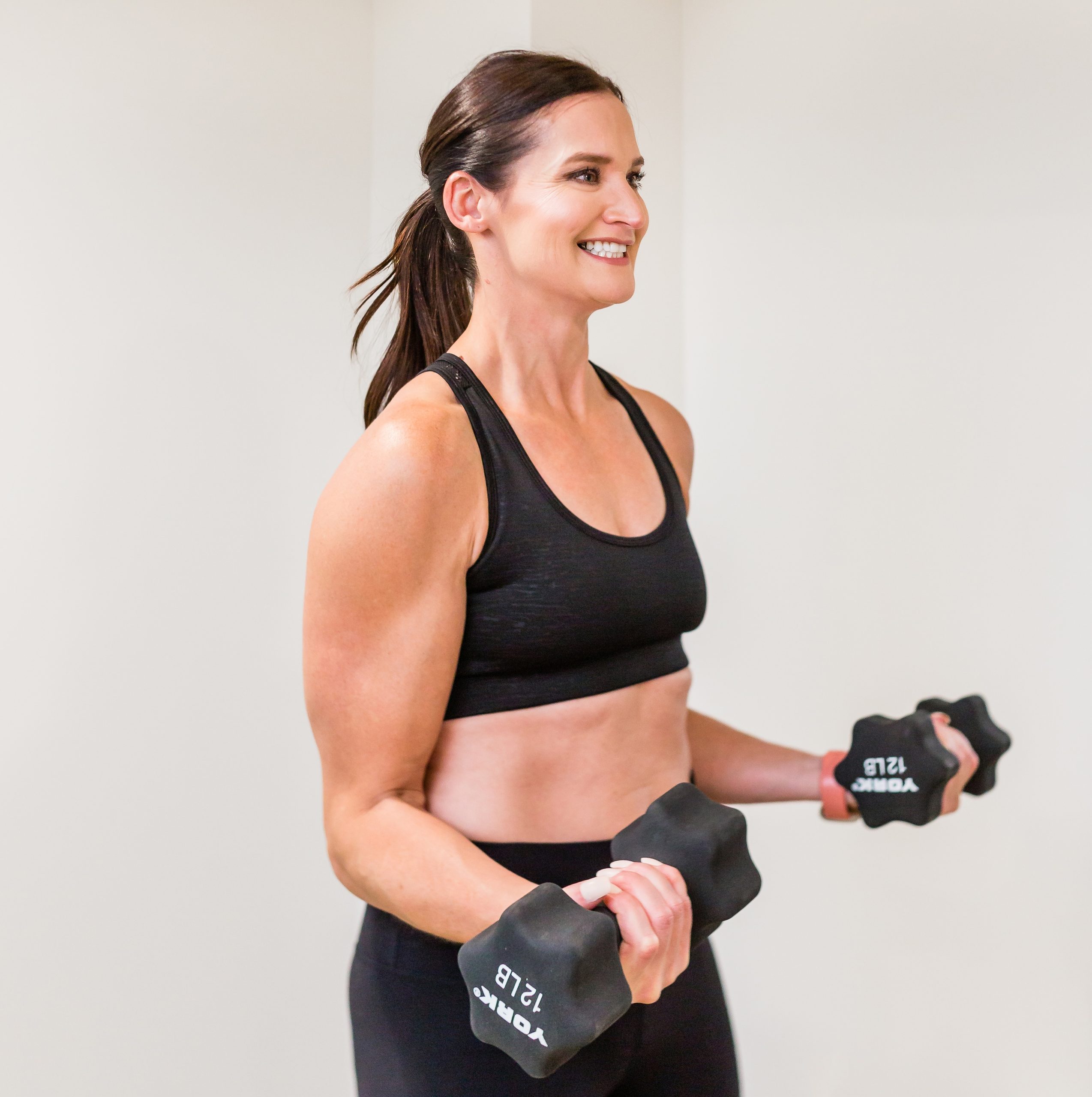
A menopause nutrition plan works best when paired with strength training. Food provides the nutrients your muscles need, while resistance exercises give your body a reason to maintain them.
You do not need a gym membership or hours of time. Two or three short strength sessions a week tells your body to keep the muscle you have. It also puts healthy stress on your bones, which matters more now that bone loss speeds up after menopause.
Common mistake to avoid: choosing only walking or cardio. Walking is great for your heart and mood. It does not build much muscle on its own.
Practical example: start with squats to a chair, wall push-ups, and rows with a resistance band. Ten minutes, three times a week, is a real start.

Step 3: Protect Your Bones and Heart With Simple Food Swaps
A balanced menopause nutrition plan should do more than support weight management. After menopause, protecting your bones and heart becomes especially important. Simple food swaps can help support both.
Focus on:
• Calcium-rich foods, like dairy, fortified plant milks, canned salmon with bones, and leafy greens
• Fibre from vegetables, beans, lentils and whole grains, which supports heart health and digestion
• Healthy fats, like olive oil, nuts, seeds and fish
Common mistake to avoid: assuming a supplement covers everything. Ask your doctor about vitamin D and calcium, but start with food.
To understand how hormones and weight gain are connected, read that post next.
Step 4: Eat Enough to Fuel Your Body
This is the step most women resist. Eating too little can leave you tired, hungry, and struggling to maintain muscle. Instead of drastically cutting calories, focus on a modest, sustainable calorie deficit while keeping protein intake high enough to support your goals.
The better path is a small, steady deficit with enough protein. That is how you release fat and keep your strength. If macros are new to you, start with what macros are and why they matter more after 40.
Common mistake to avoid: cutting to very low calories “just to see what happens.” The result is usually a stall, then a rebound.
Practical example: a woman eating 1,200 calories with very little protein often has more success eating more, built around protein and vegetables, plus strength training. The scale may move more slowly. Her body composition changes more.

Your menopause nutrition plan doesn’t need to be restrictive or complicated. With the right balance of protein, strength training, nutrient-rich foods, and enough fuel, you can support your health and feel stronger after menopause.
Protein at every meal. Strength training a few times a week. Food that supports your bones and heart. And enough fuel to keep your metabolism working for you.
If you want a coach to build this with you, Empowered Macro Nutrition gives you personalized macros, real coaching, and a plan that fits your life after menopause. You can learn more and apply here:


Comments Off on What Changes After Menopause and How to Build a Menopause Nutrition Plan That Works