

Menopause nutrition plays a major role in how you feel day to day. Menopause brings big changes to your body. Hot flashes, mood swings, low energy, and weight changes are all part of the journey. The right menopause nutrition approach can help reduce symptoms, support hormone balance, and improve overall wellness. By learning which foods to eat during menopause and building realistic habits, you can feel more energized and in control of your health. Many women struggle simply because they are unsure what actually works or how to apply it consistently.

The Food Puzzle: Why Healthy Eating Can Be Confusing
- Conflicting advice online makes it hard to know what works.
- Hormonal changes affect metabolism, hunger, and cravings.
- Many people rely on quick fixes instead of long-term strategies.
- Busy lifestyles make consistent healthy eating tough.
- Lack of personalized guidance can lead to frustration.
Don’t worry! This post will show you practical menopause wellness tips and meal strategies that are simple, doable, and effective.
Step 1: Menopause Nutrition and Hormone-Balancing Foods
Hormone-balancing foods are the foundation of effective menopause nutrition and symptom support.
Motivation: Eating the right foods can reduce menopause symptoms and boost energy.
Include protein, healthy fats, and fiber-rich carbs at every meal. Foods like salmon, leafy greens, beans, avocado, and berries help balance hormones and reduce inflammation. For example, adding chia seeds to your yogurt or having a salad with nuts and chicken for lunch can help stabilize blood sugar and energy. One client, Lisa, noticed her hot flashes were less intense and she felt more energetic after adjusting her meals to include these foods. Much of the confusion around food choices comes from outdated advice and common menopause myths that do more harm than good.
Common Mistakes: Skipping meals or avoiding entire food groups. This can worsen symptoms and slow metabolism.

Step 2: Menopause Nutrition with a Balanced and Flexible Meal Plan
Menopause nutrition does not need to be perfect to be effective, it needs to be consistent and realistic.
Motivation: Flexibility is key to making menopause healthy eating realistic.
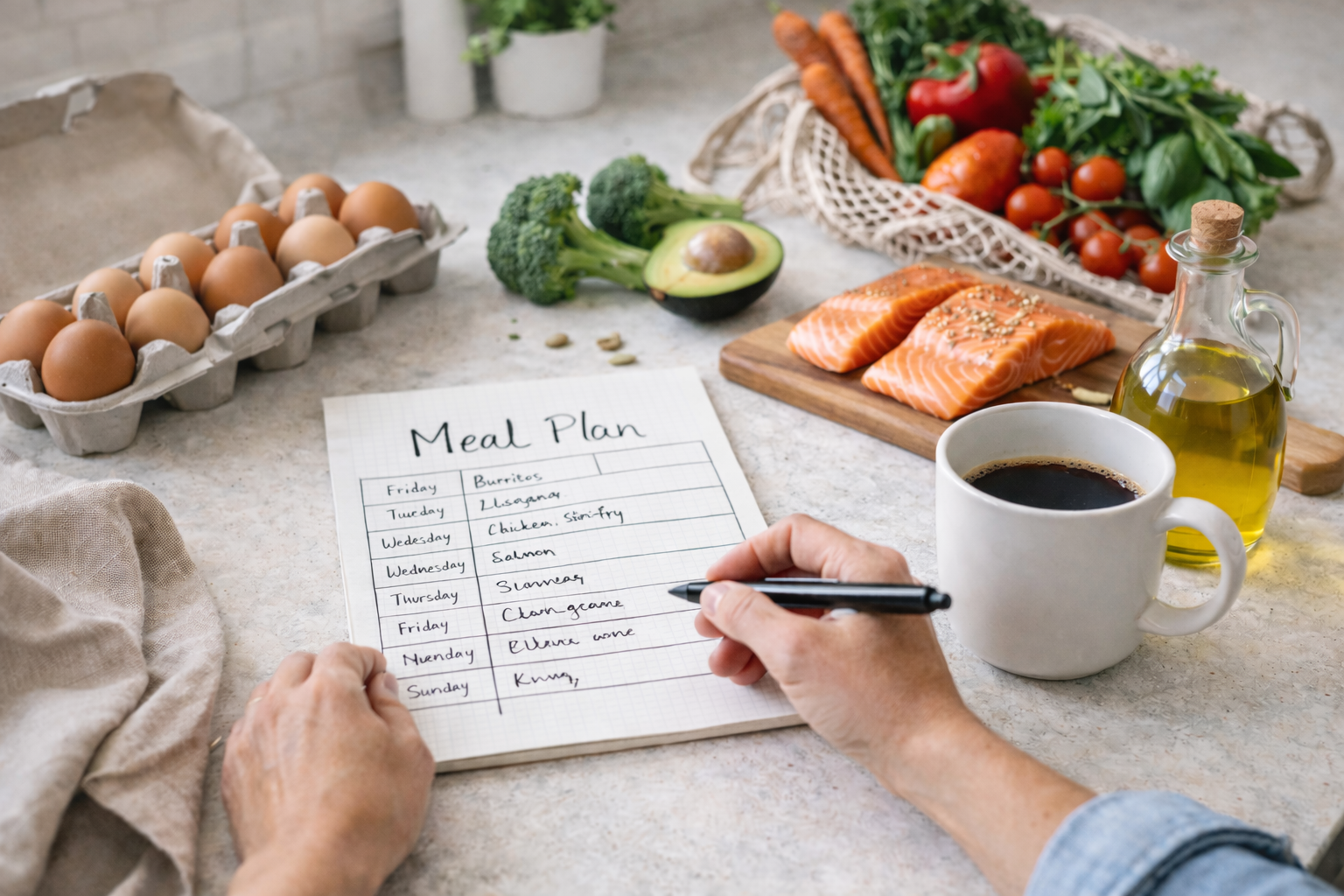
Plan meals that include variety while keeping balance in mind. For instance, mix protein with complex carbs and healthy fats: eggs with spinach and whole-grain toast for breakfast, or grilled salmon with quinoa and roasted veggies for dinner. Avoid trying strict “perfect” plans—flexible nutrition for women in menopause makes long-term success much easier.
Common Mistakes: Following rigid diets or eliminating favorite foods. Rigid plans lead to burnout and poor adherence.

Step 3: Support Your Health with Nutrients and Lifestyle
Menopause nutrition works best when paired with key nutrients, movement, stress management, and quality sleep. According to the Cleveland Clinic menopause overview, menopause affects your whole body and healthy nutrition and lifestyle habits can help reduce symptoms and support long-term health.
Motivation: Vitamins, minerals, and lifestyle choices amplify the benefits of good nutrition.
Focus on calcium, magnesium, vitamin D, and antioxidants to support bone, heart, and brain health. Pair your diet with movement, stress management, and proper sleep. For example, adding a daily 20-minute walk plus a colorful salad rich in antioxidants can improve energy and help with weight management. The light at the end of the tunnel is feeling healthier, more energized, and empowered in your menopause journey. A flexible approach is especially important if you’re dealing with menopause weight gain and trying to avoid rigid dieting cycles.
Common Mistakes: Neglecting nutrients or lifestyle factors. Good nutrition works best alongside healthy habits.

With the right menopause nutrition strategy, you can reduce symptoms, improve energy, and feel more confident in your body. By focusing on hormone-balancing foods, creating flexible meal plans, and supporting your health with key nutrients, you can navigate menopause with better energy, reduced symptoms, and improved wellness. Imagine feeling in control of your body, enjoying your meals, and feeling more vibrant every day.
Want to make it even easier?
Download our Free “Perimenopause & Menopause Protocol”. It’s packed with meal ideas, hormone-balancing foods, and simple strategies to help you feel amazing during menopause. Enter your email and get instant access today!


Be the first to comment